- Reimagined (formerly Anti-Racism Daily)
- Posts
- What to know about Venezuela.
What to know about Venezuela.
A quick and dirty list of resources unpacking the U.S. invasion of Venezuela and its impact on its people.

Nicole Cardoza
January 04, 2026

Forwarded this newsletter? Subscribe here.
Good morning and welcome back! I dedicated most of today’s newsletter to quick, tangible resources on the conflict unfolding in Venezuela, which makes today’s edition pretty news-heavy.
If you’ve been blissfully offline, you may have missed my collection of new year’s poems and this guide to reimagining your new year’s resolutions. I know they’ve resonated with many of you, and hope they can bring more lightness to an already heavy week.
Has this newsletter helped you reimagine? Or taught you something new? Consider making a one-time or monthly donation on our website, PayPal or Venmo (@reimaginednews) to help sustain this work. You can always manage your subscription here.
Take care,
Nicole
ps – looking for the audio version of this newsletter? Click to read the web version, and you’ll find the audio recording at the top of the page. This is a service provided by Beehiiv, our email publishing platform, and AI-generated.


Venezuelans protest against the results of the country’s July 2024 presidential election, in Caracas. Maxwell Briceno/Reuters.
After months of escalating its military presence and creating economic turmoil in Venezuela, the Trump administration has invaded the nation and placed it under U.S. control. Here’s a quick breakdown of the situation and how we got here. Please don’t only read my quick headlines; explore the links and do your own research, too!
The U.S. carried out a “large-scale attack” in Venezuela and captured its president, Nicolás Maduro. Democracy Now >
Trump stated that the U.S. will “run” Venezuela now that its President is under U.S. custody, a move that world leaders have condemned as a violation of international law. Truthout >
Why would the U.S. want to seize control of Venezuela? Here’s a helpful explainer.
During his press conference, President Trump made it clear that the U.S. operation is about — at least in part — control of Venezuela's oil. NPR >
The abduction of Maduro by the U.S. puts an end to his controversial 12-year reign of Venezuela, during which millions fled the country, the economy plunged, and the country lost key allies. CNN >
I also recommend this article from Vox. It was published in 2017, but it offers an in-depth look at the start of Maduro’s reign.
Trump had already waged war on Venezuela before this invasion, causing economic woes and panic among the people. This analysis by Michelle Ellner for Venezuelanalysis, an independent local news site, explains more. Venezuelanalysis >
Venezuelans are estimated to be the largest refugee population in the world. Over 8 million have been forcibly displaced since 2014. Here’s why. UN >
Trump's regime change in Venezuela is a sharp departure from MAGA agenda, and will likely alienate him from more Republicans. Reuters >
Venezuelans in Miami celebrate the capture of Nicolás Maduro, highlighting why many Latinos in the U.S. support Trump’s hostile stance on some South American leaders and the drug trade.

 | Conflict Evolution 101Tuesday, January 13 | 3-5pm EST Learn how to navigate moments of tension and conflict as they arise in professional settings. Participants will learn practical, real-time strategies for de-escalating situations, intervening effectively, and rebuilding trust after moments of rupture. Through hands-on practice and scenario work, we’ll develop a personalized toolkit for addressing workplace tensions while maintaining cultural awareness and psychological safety. |
 | Rupture and RepairTuesday, February 10 | 3-5pm EST Learn how to navigate moments of tension and conflict as they arise in professional settings. Participants will learn practical, real-time strategies for de-escalating situations, intervening effectively, and rebuilding trust after moments of rupture. We’ll develop a personalized toolkit for addressing workplace tensions while maintaining cultural awareness and psychological safety. |


Indigenous activists participate in a climate protest during the COP30 U.N. Climate Summit in Belém, Brazil. Andre Brenner / AP Photo
Here’s the global playbook being used to crack down on climate protest. A new study finds that repression of environmental protest is rising worldwide, and Indigenous land defenders face the greatest risk. Grist >
With their breadwinners killed, Gaza’s children turn to begging to survive. More than 64,000 children in Gaza have reportedly been killed or maimed since 2023. Many who survived are now orphans. Truthout >
An entire library board was dissolved over one picture book about a trans kid. Randolph County Public Library is doing without its Board of Trustees for now. them >
Mamdani revokes the executive order banning divestment from Israel on his first day. The new NYC mayor, right after his inauguration, also signed a number of executive orders aimed at increasing the housing stock and protecting renters. Truthout >
JPMorgan steered Black advisers to poorer areas, a new lawsuit alleges. JPMorgan Chase is facing a lawsuit by two former Black female employees who claim the company assigned them to less affluent areas in Brooklyn, New York, due to their race. Bloomberg >
Trump spent 2025 making trans lives unlivable. It’s time for Democrats to defend them. Elected Democrats haven’t done nearly enough to oppose attacks on gender-affirming care. They risk being on the wrong side of history. The Intercept >
Remembering Imam Jamil al-Amin. From the South and beyond, we mourn the passing of Black Revolutionary and Islamic faith leader, Imam Jamil Abdullah al-Amin, who transitioned in federal prison custody on November 23, 2025 at the age of 82. Scalawag >
Amnesty International reports "torture," "inhumane" conditions at Alligator Alcatraz. The report states people in detention were "routinely shackled" for long periods — sometimes more than 24 hours — while being transported, and are subject to “poor quality food, extreme temperatures, permanent lighting, and limited access to clean water." Axios >
Fourteen people died in NYC jails in 2025. Deaths in New York City jails nearly tripled last year’s total, underscoring the city’s failure to provide basic safety in its jails—a failure that led a federal judge to intervene in May 2025. Vera >
‘This is not a peaceful protest!’ NPR’s detailed, visual report on the insurrection at the U.S. Capitol highlights how Trump has tried to shift the narrative since the events unfolded. NPR >

These are my favorite longform investigative journalism pieces to contextualize major social justice issues.
How a Global Online Network of White Supremacists Groomed a Teen to Kill. The murders of two people outside an LGBTQ+ bar at first looked like the act of a lone shooter. A ProPublica and FRONTLINE investigation shows they were, in fact, the culmination of a coordinated, international recruiting effort by online extremists. ProPublica >
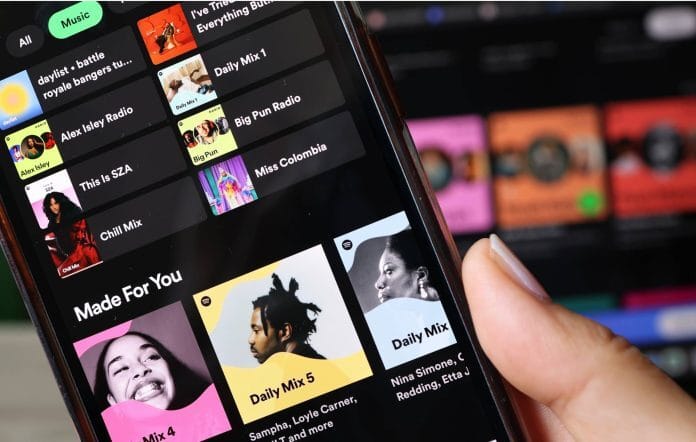
The Ghosts in the Machine. As an avid music fan, I’m always heartbroken when I discover the new artist I’m listening to is. For Harper’s, Liz Pelly investigates the ghost artists that are dominating Spotify’s algorithm. This doesn’t specifically address AI artists, but makes the same case for why they’d run rampant on the platform. Harper’s >
UnitedHealthcare Tried to Deny Coverage to a Chronically Ill Patient. He Fought Back, Exposing the Insurer’s Inner Workings. After a college student finally found a treatment that worked, the insurance giant decided it wouldn’t pay for the costly drugs. His fight to get coverage exposed the insurer’s hidden procedures for rejecting claims. ProPublica >
Messing With Texas: How Big Homebuilders and Private Equity Made American Cities Unaffordable. Dallas was one of the last big cities in America where a working family could buy a house. No longer. And it's not because of zoning policy—it's because of corporate consolidation and private equity. The Big Newsletter >
The Great Grocery Squeeze. A great look at the end of local mom-and-pop grocers, and how the end of the Robinson-Patman Act, which once made price discrimination illegal, supported the growth of big box retailers. The Atlantic >
On The Death of Daydreaming. A look at how humanity has been reshaped by technology and constant access to stimuli, and what it means for our culture. After Babel >
“The River House Broke. We Rushed in the River.” “On July 4, the Guadalupe ripped our home from its pillars, pulling my family into its waters and into the night. Then morning came.” This firsthand account of surviving the floods in Texas helps contextualize the horrors of the environmental threats we face. Texas Monthly >
Make a one-time or monthly donation on our website, PayPal or Venmo (@reimaginednews)
Sponsor an upcoming issue
Refer this newsletter to a friend
Reply